June 7, 2023
Understanding the origins, labeling practices, and real-world performance differences between imported imitation cedar products and authentic Western Red Cedar
For homeowners, gardeners, and builders, choosing the right wood matters — not just for appearance, but for longevity, sustainability, and overall performance. Over the last two decades, imported wood products from Asia have entered the North American market under several names, including China Fir, Chinese Cedar, or simply “Cedar”.
These products often look similar to North American cedar at first glance, but they differ significantly in species, durability, and long-term outdoor performance. This has created confusion among buyers who believe they’re purchasing genuine cedar when, in fact, the wood may be something entirely different.
This guide provides a balanced, educational comparison of Chinese Fir (also marketed as “Chinese Cedar”) and Western Red Cedar, helping you understand what you’re buying — and why species identification and labeling accuracy truly matter.


 What Is Chinese Fir / Chinese Cedar?
Chinese Fir (Cunninghamia lanceolata) is a fast-growing softwood species native to China and parts of Southeast Asia.
Around the mid-2000s, this species began entering the North American market in large quantities. To make it more appealing to consumers already familiar with cedar products, some suppliers marketed it as:
“China Fir”
“Chinese Cedar”
"Cedar”
This naming created the common misconception that Chinese Fir is related to Western Red Cedar — but it is not a cedar species and does not share the same performance characteristics.
 History of Imitation Cedar Products in North America
2005–2015: The Rise of Imported Softwoods
Around 2005, bulk shipments of China Fir began entering North America. It was initially marketed as “China Fir”, but over time, manufacturers and resellers adopted the term “Chinese Cedar” to leverage the reputation of North American cedar products.
2020–Present: Labeling Confusion
By 2022, many of these products dropped the geographic association entirely and were sold simply as “cedar”, with:
1. No species listed
2. No country of origin
3. No wood identification markings
This lack of clarity can mislead consumers into assuming they’re buying a cedar equivalent at a lower price — even though the performance, durability, and lifespan may be very different.
 Side-by-Side Comparison: Chinese Fir vs. Western Red Cedar
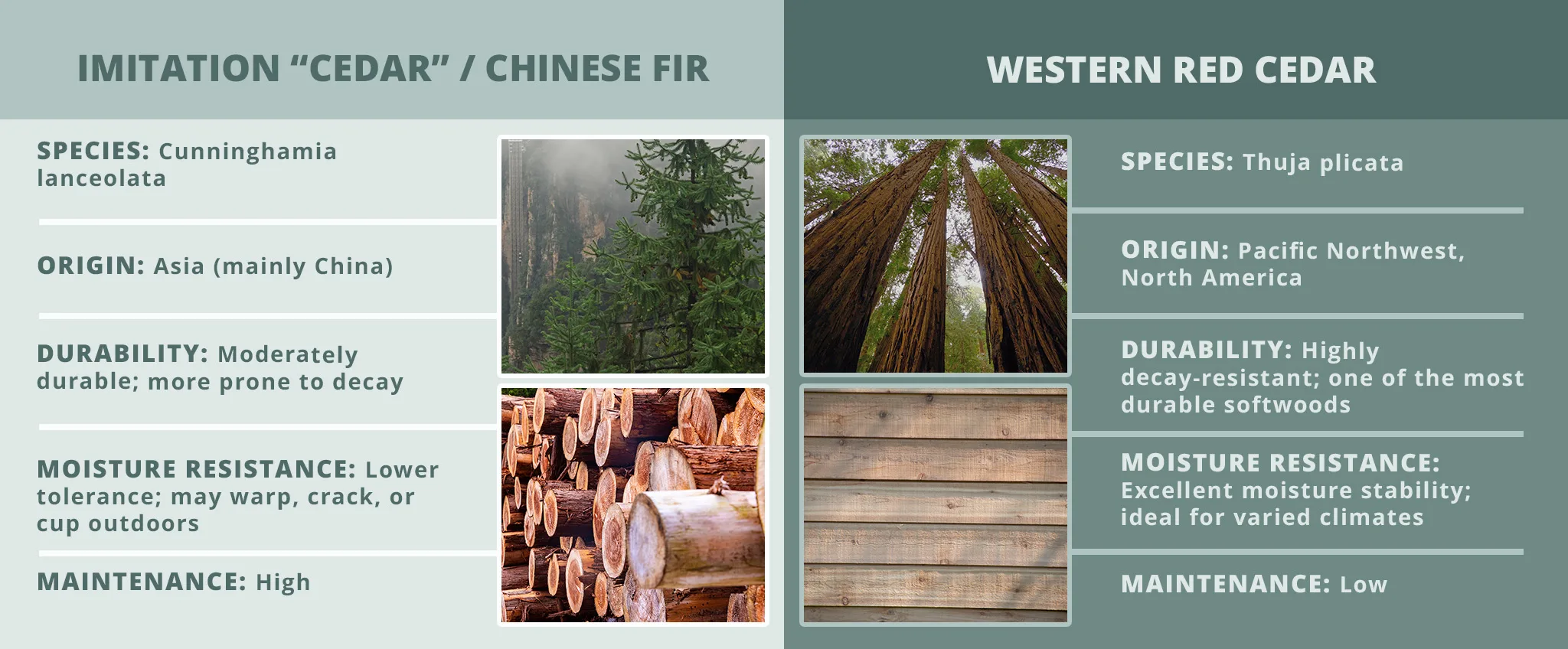
Below is a neutral, factual comparison based on known characteristics of each species.
| Category | Chinese Fir (“Chinese Cedar”) | Western Red Cedar |
|---|---|---|
| Species | Cunninghamia lanceolata | Thuja plicata |
Origin | Asia (mainly China) | Pacific Northwest, North America |
Appearance | Pale white to light yellow; rougher grain | Warm reddish-brown; fine, straight grain |
Durability | Moderately durable; more prone to decay | Highly decay-resistant; one of the most durable softwoods |
Moisture Resistance | Lower tolerance; may warp, crack, or cup outdoors | Excellent moisture stability; ideal for varied climates |
Insect Resistance | Moderate | Naturally insect-resistant due to natural oils |
Lifespan Outdoors | Requires frequent sealing/staining | Long-lasting with minimal maintenance |
Maintenance Needs | High | Low |
Sustainability | Varies by exporter; verification required | Sustainably managed North American forests |
Typical Uses | Interior finishing, low-exposure projects | Sheds, pergolas, siding, decking, outdoor structures |
 Why Labeling Matters
Correct labeling protects buyers by:
Ensuring the wood species matches the performance you expect
Preventing confusion between fast-growing imports and durable North American cedar
Helping consumers choose the right material for outdoor longevity
Supporting transparency in forestry practices and environmental sourcing
When a product is sold simply as “cedar” without species information, the buyer cannot make an informed decision — especially when longevity outdoors is a priority.
Where Western Red Cedar Offers an Advantage
Western Red Cedar (Thuja plicata) has been used in North American structures for centuries. It’s preferred because of:
✓ Natural Durability
Rich in natural oils that resist moisture, decay, and pests.
✓ Stability in Moisture & Weather
Low density and cell structure help prevent warping, cracking, and movement.
✓ Proven Longevity
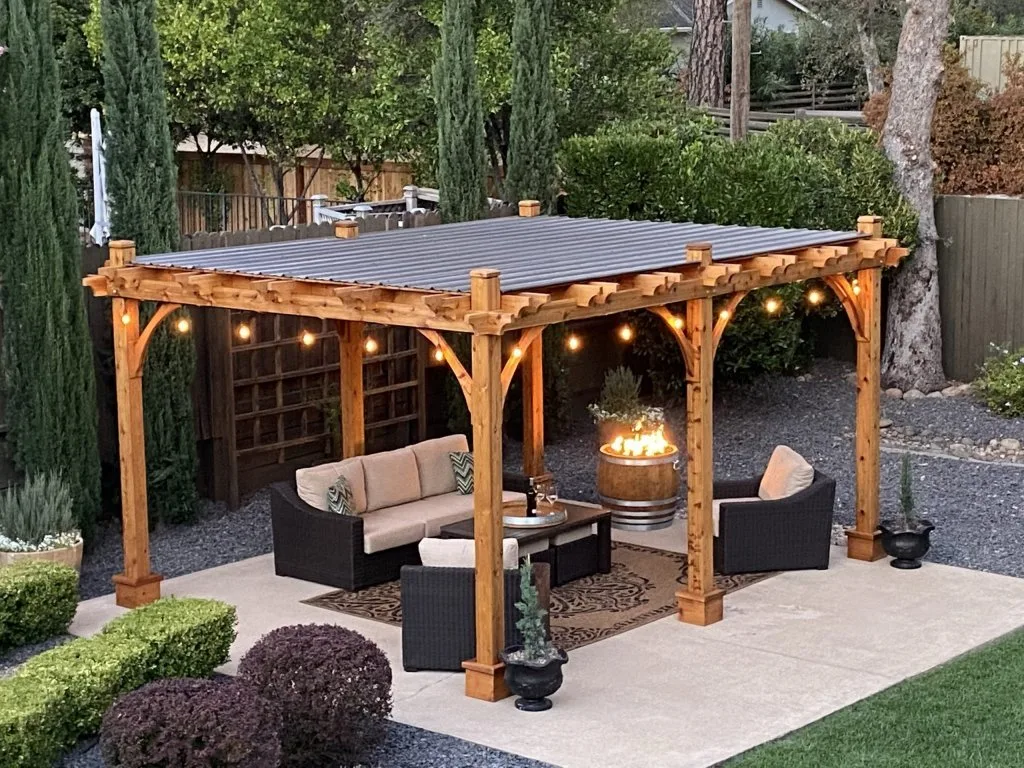
Ideal for long-term outdoor builds like sheds, pergolas, fencing, siding, and raised garden beds.
✓ Aesthetic Appeal
Warm tonal variations and straight grain create a premium, timeless look.
✓ Sustainable Forestry Practices
Managed, certified, and traceable North American sources ensure environmental responsibility.
 Conclusion
Both Chinese Fir (“Chinese Cedar”) and Western Red Cedar are usable woods with their own strengths. Chinese Fir works well for interior applications, sheltered environments, or budget-conscious projects.
However, when long-term outdoor performance, moisture stability, and low maintenance are priorities, Western Red Cedar remains one of the most reliable softwood choices in North America.
Clear labeling and species identification empower buyers to choose the right wood for their needs — and avoid confusion created by marketing names that imply cedar equivalence where none exists.
 Want to learn more about real Western Red Cedar?
Explore our guide on durability, sustainability, and how authentic cedar performs in outdoor structures.
 How To Reduce Premature Wood Decay and Degradation Of Your Outdoor Project