🏗️ How To Build A Foundation

A solid foundation is the key to a long-lasting shed. At Outdoor Living Today, we want to help you create a sturdy, level base for your shed—without confusion or guesswork. Whether you’re a DIY pro or first-timer, this guide walks you through clear, step-by-step instructions and multiple foundation options.

 Three Recommended Foundation Types:

  • Patio Stones (Fast & Easy)
  • Pressure-Treated 4×4 Beams (Durable & Elevated)
  • Concrete Slab (Permanent & Weather-Resistant)
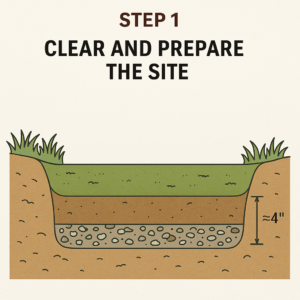
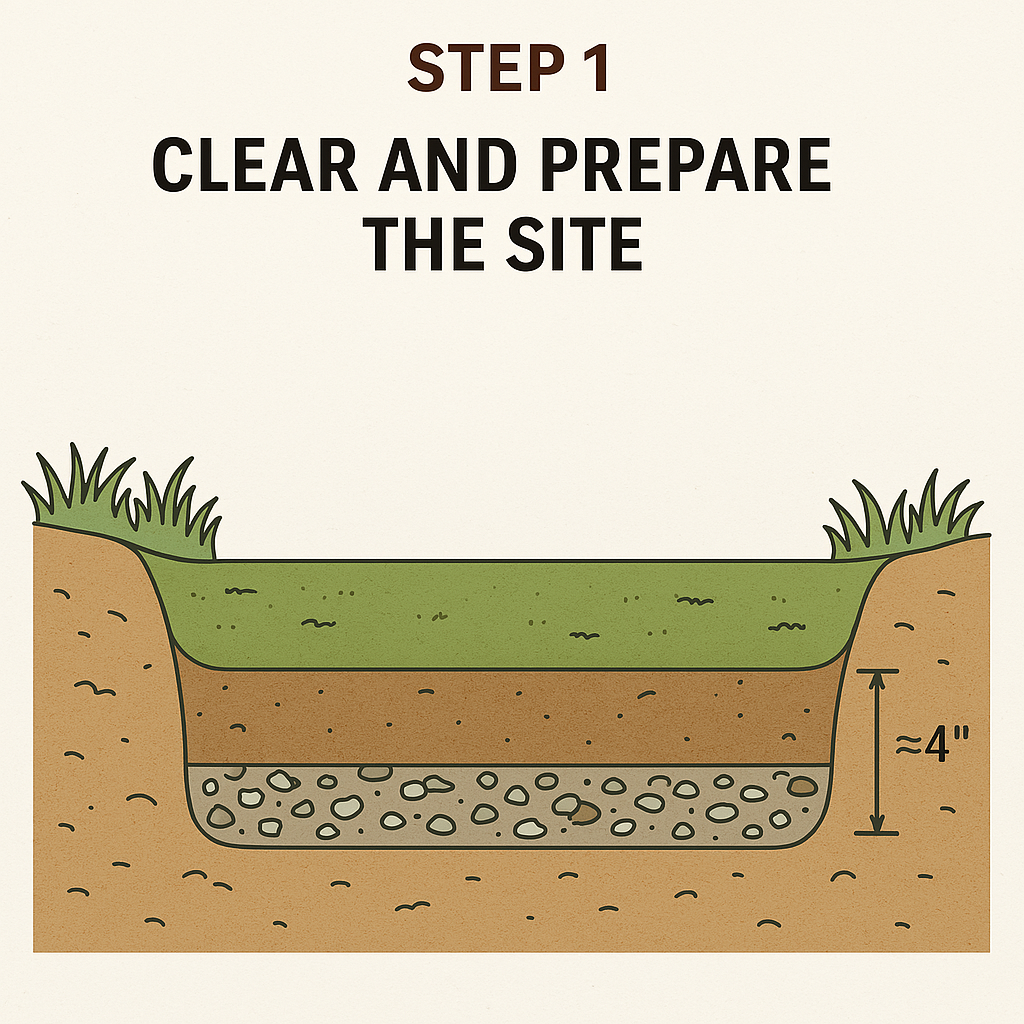
OLT How To Build A Foundation Graphic Steps 10STEP 1: Clear & Prepare the Site

Before your shed kit arrives:

  • Remove grass, debris, roots, and rocks.

  • Make sure the area is flat and drains well.

  • The ground should slope away from the site (approx. 1/8″ per foot over 10 feet) to prevent water buildup.

  • For best results, excavate 4 inches and fill with gravel or crushed rock.

💡 Pro Tip: Use a landscape fabric under gravel to prevent weed growth and soil shifting over time.
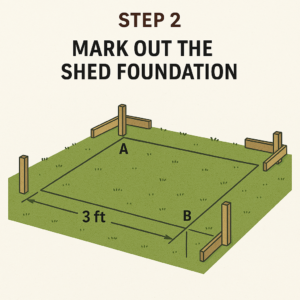


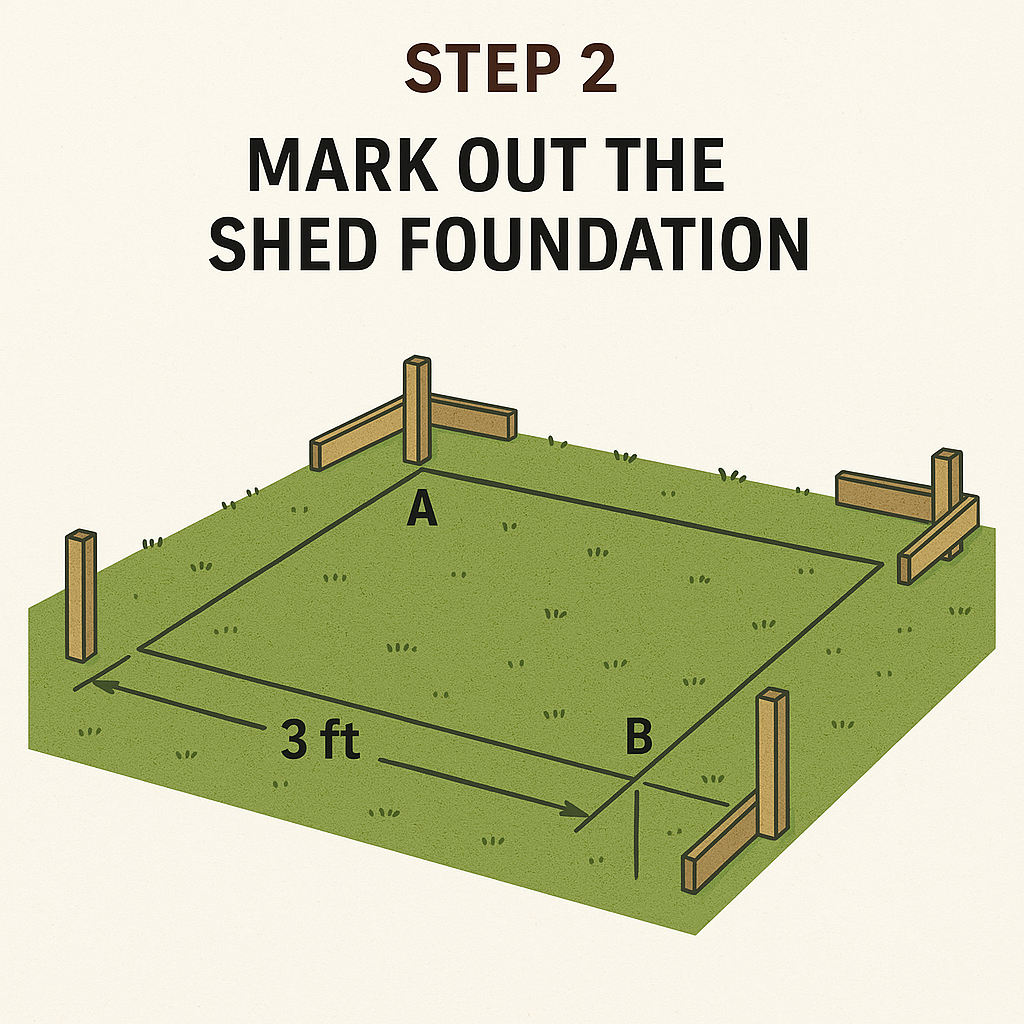
OLT How To Build A Foundation Graphic Steps 2STEP 2: Mark Out the Shed Foundation

  • Pick one corner (Point A) and drive a stake into the ground.

    Use the 3-4-5 triangle method (based on the Pythagorean theorem) to ensure your layout is square—this method works for any shed size:

    • Measure 3 feet (or any multiple) on one side, and 4 feet (or same multiple) on the adjacent side. The diagonal between them should be exactly 5 feet (or the matching multiple).

    • For larger sheds, you can use 6-8-10 or 9-12-15—just maintain the ratio.

    Once your corners are square, outline the full perimeter using string and batter boards.

📏 Need help squaring? There are apps and online calculators that can assist with right angles using your shed dimensions.


STEP 3: Choose Your Foundation Type
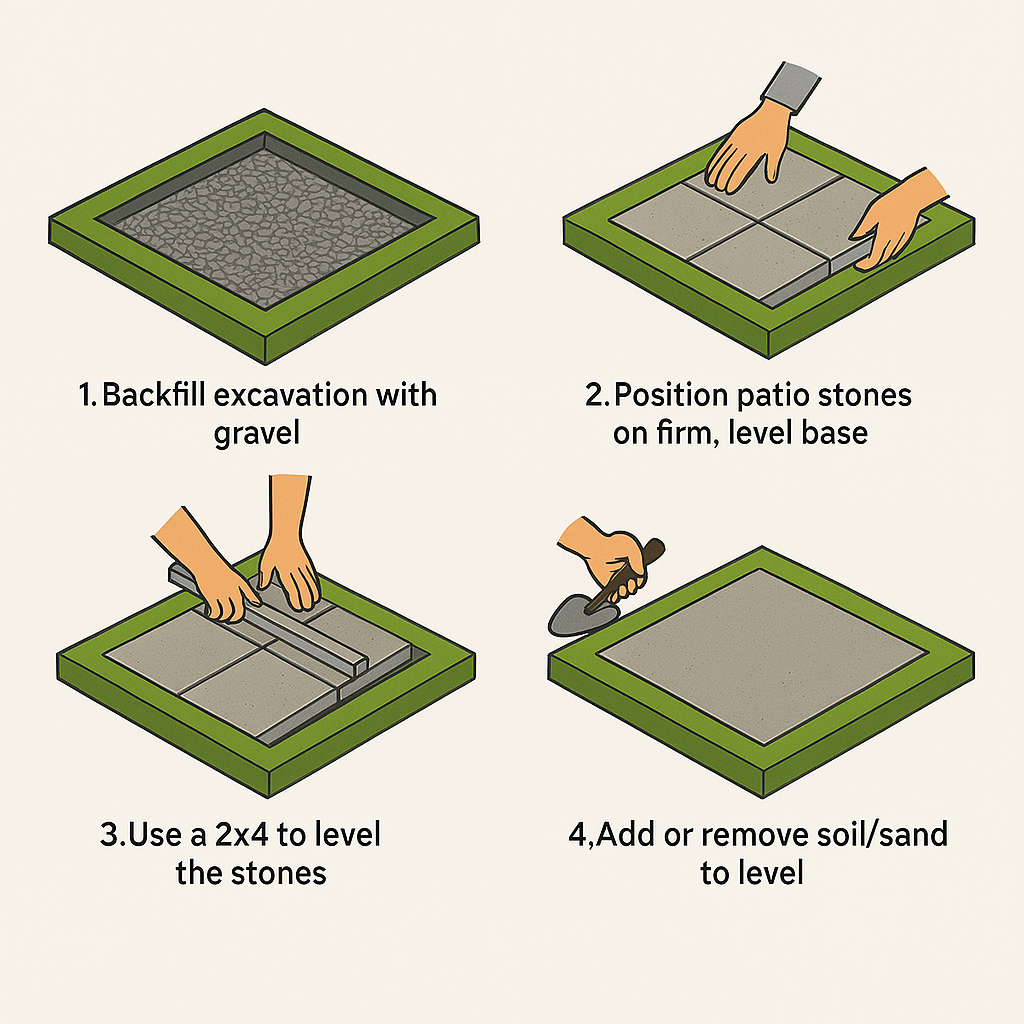
OLT How To Build A Foundation Graphic Steps 7

Patio Stone Foundation

  • Best for small to medium sheds on stable ground.

  • Level the soil or gravel, then place stones under key floor joist points (see your floor plan).

  • Adjust using sand or soil for leveling.

  • Space stones evenly to support the shed’s perimeter and any internal floor joists for balanced weight distribution.

  • Use a long 2×4 and a carpenter’s level to ensure all stones sit flat and level across the entire footprint.

✅ Quick to install, affordable, and easy to move or adjust.
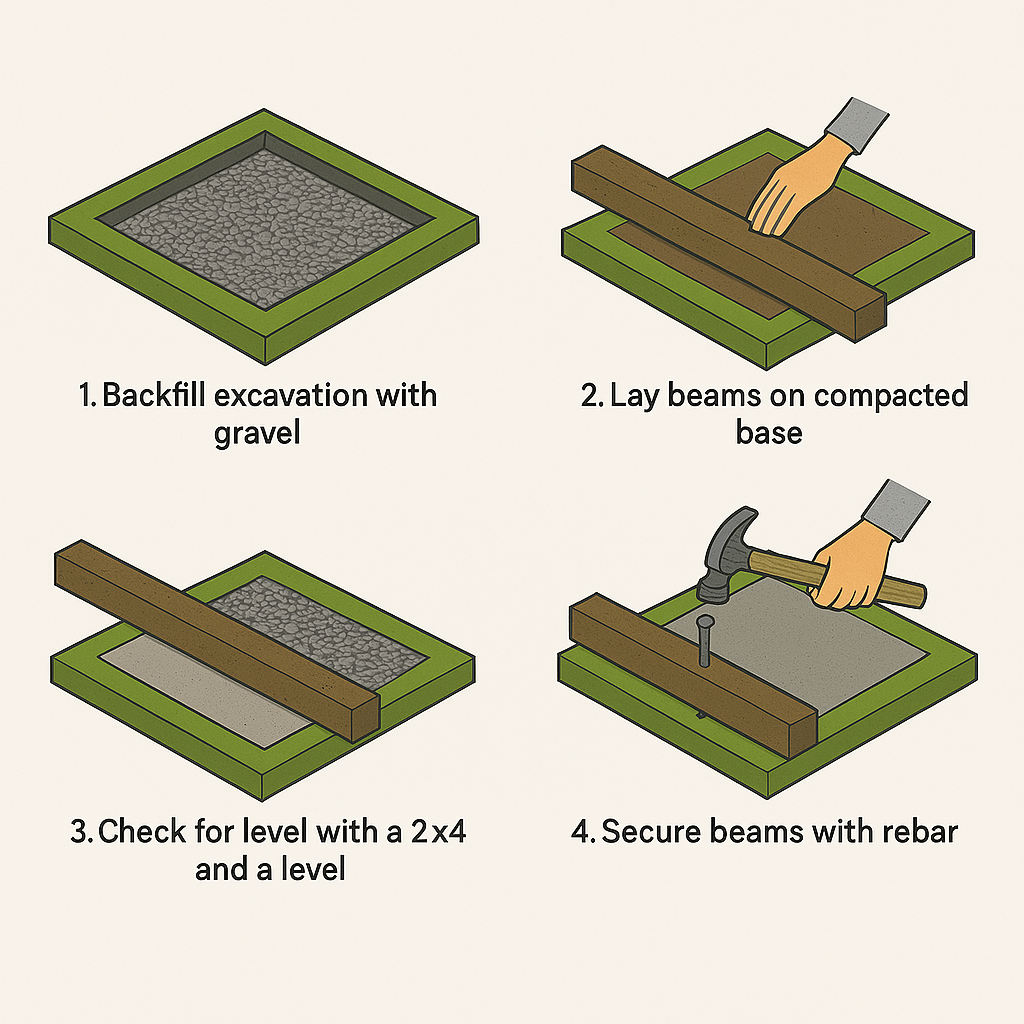


OLT How To Build A Foundation Graphic Steps 84×4 Pressure-Treated Beam Foundation

  • Ideal for slightly uneven terrain or areas where airflow is needed beneath the shed.

  • Lay beams perpendicular to joists on a gravel base.

  • Use rebar (½”) driven through pre-drilled holes to secure beams in place.

  • Leave space between beams to promote drainage and prevent moisture buildup under the shed.

  • Ensure all beams are level and aligned before attaching floor joists for a stable, even base.

🪵 Leaves room underneath for ventilation and helps prevent rot.
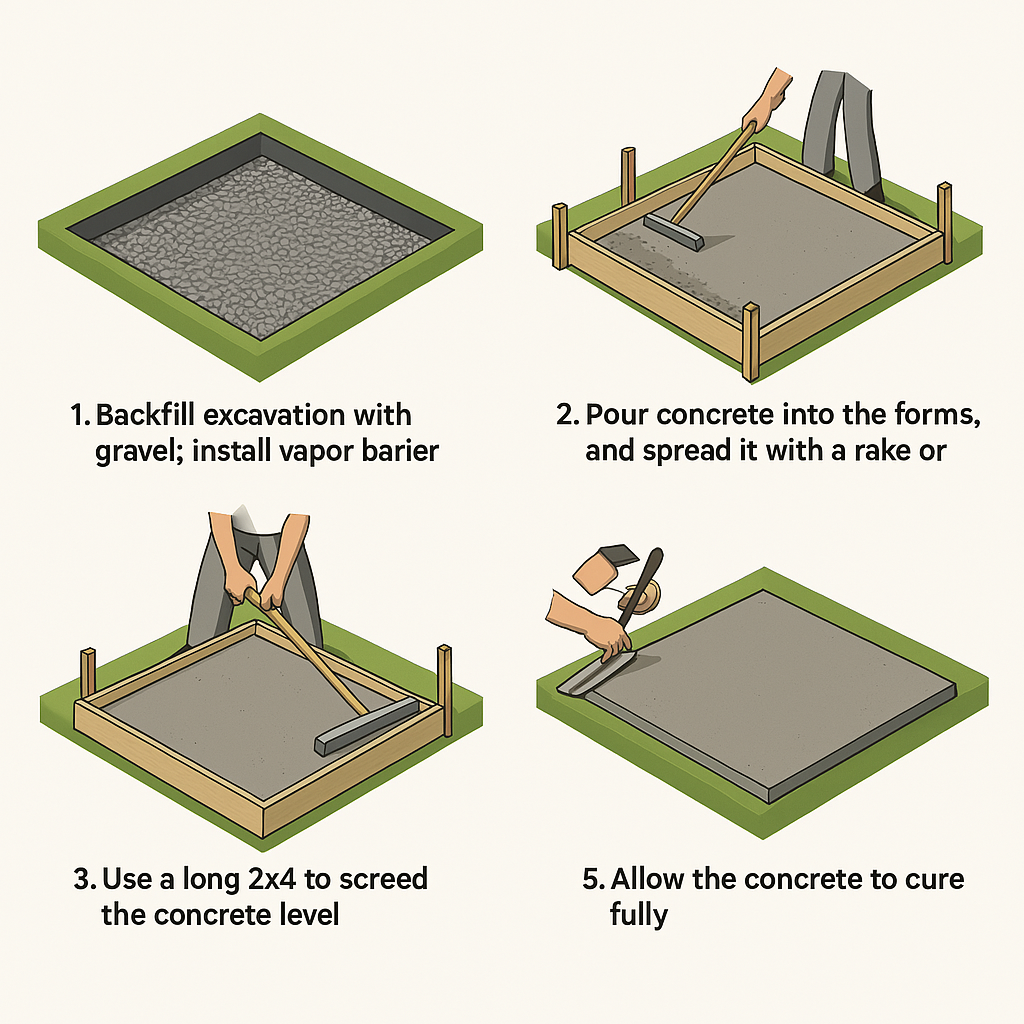


OLT How To Build A Foundation Graphic Steps 14Concrete Slab Foundation

  • Best for large, heavy-duty sheds or long-term placement.

  • Excavate 6 inches: 4″ of gravel, 4″ of concrete slab.

  • Include a plastic vapor barrier between gravel and slab.

  • Frame your pour with 2x4s, level and finish with a trowel or bull float.

🔒 Most permanent option. Offers unbeatable durability and pest resistance.


⚠️ Final Tips Before You Start:

  • Always check local building codes and permit requirements.

  • Call your local utility provider before you dig to avoid underground lines.

  • Don’t skip drainage—it’s your best defense against rot and frost heave.


🔍 Need More Specific Foundation Guidance?
While this guide provides general best practices for preparing a foundation, individual product designs may have unique requirements. For a more tailored guide for your specific model, please refer to the provided product assembly manual included with your kit or available above .

Read More

5 Creative Ways to Transform Your Cedar Shed

Feeling short on space at home? A cedar garden shed can be more than just a place for tools. It can become an extension of your lifestyle. From a peaceful backyard office to a cozy family hangout, your Western Red Cedar shed is the perfect foundation for a functional, beautiful, and sustainable space.

The traditional garden shed isn’t just for storing outdoor tools and gardening supplies. With a bit of creativity or help from a contractor, it can be transformed into a versatile addition to your home.

Here are five ways to reimagine your backyard shed and bring your outdoor living dreams to life.


1. The Backyard Office

Working from home comes with distractions. Kids running around, doorbells ringing, and a fridge just steps away can make it hard to stay focused.

Creating a separate workspace in your backyard helps set clear boundaries and improves your work-life balance.

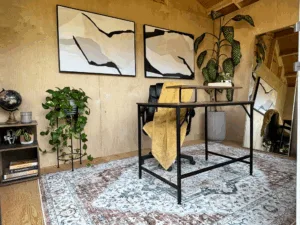
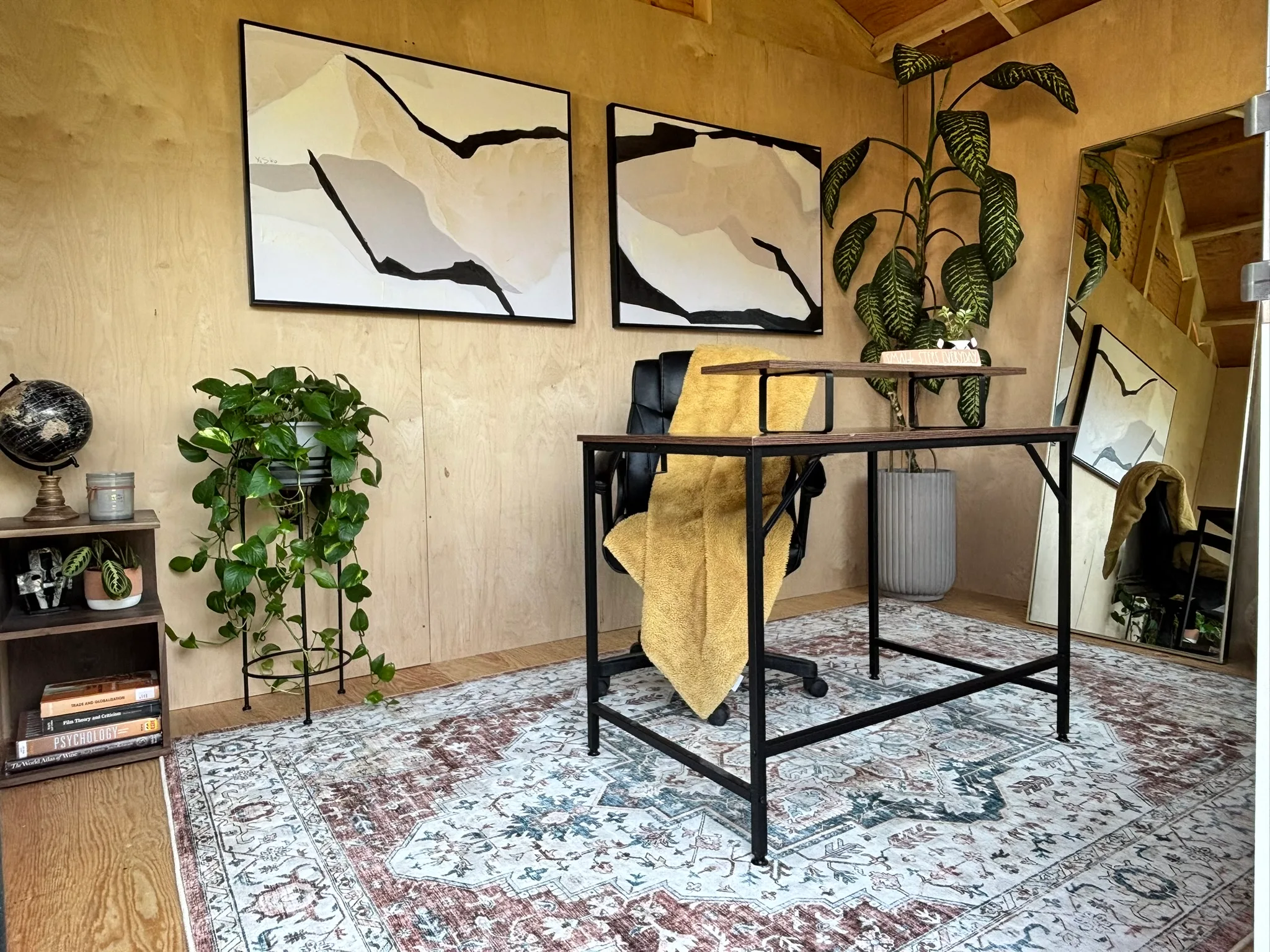
A cedar garden shed office offers privacy, natural beauty, and flexibility — complete with power, insulation, and your choice of décor.

A cedar shed office brings calm and focus to your daily routine.

Saltbox Studio Western Red Cedar 12x8 Cedar Shed Office DIY Kit 8.png

2. The She Shed, Man Cave, or Rec Room

Everyone deserves their own space to unwind.

Many families are turning cedar sheds into personalized retreats — “she sheds,” “man caves,” or even kids’ rec rooms.

If your main house feels full, a small cedar shed can become a perfect hideaway.

Imagine reading after dinner, enjoying your hobbies in peace, or watching the big game without interrupting family time.

IMG 6674.JPEG.png

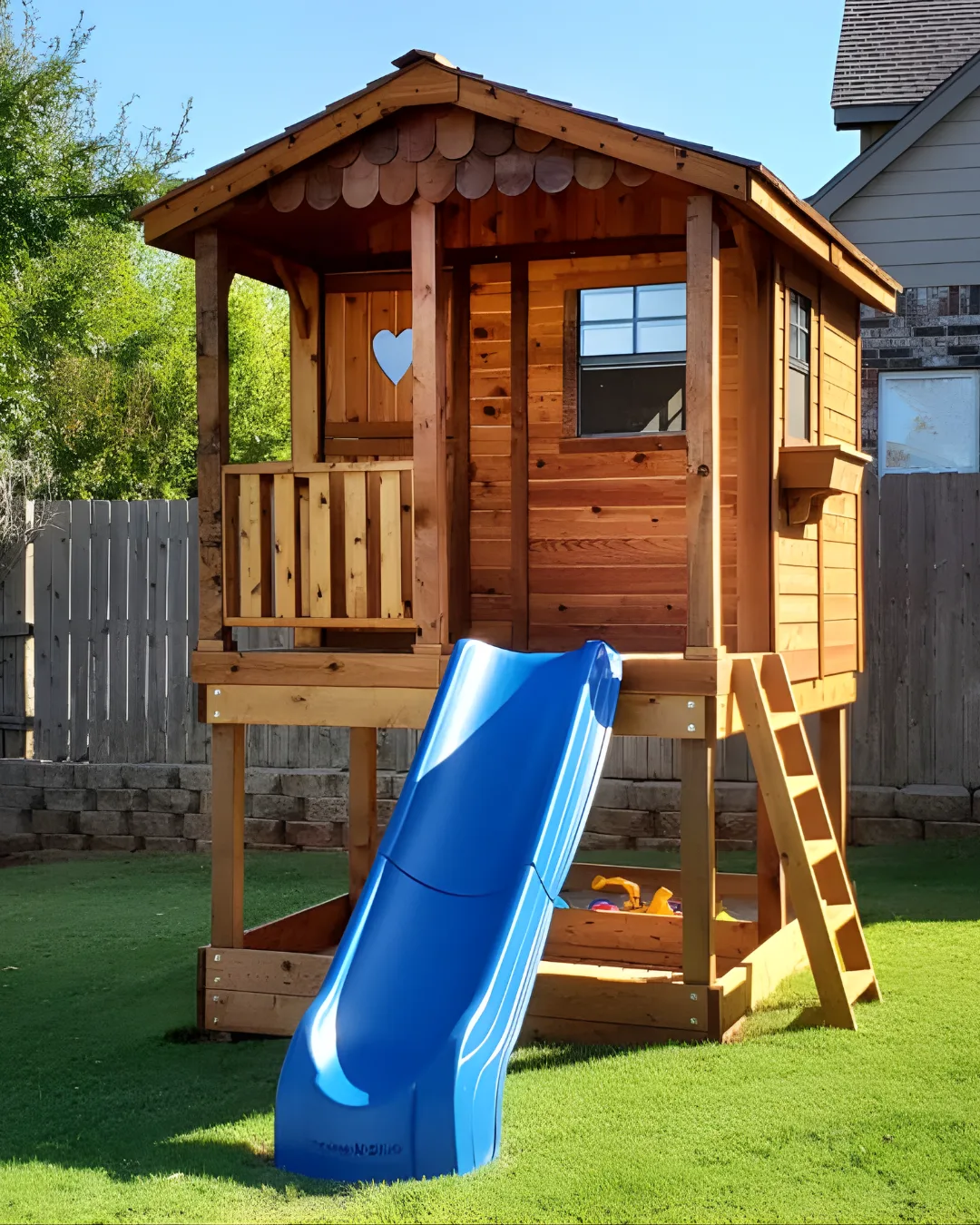
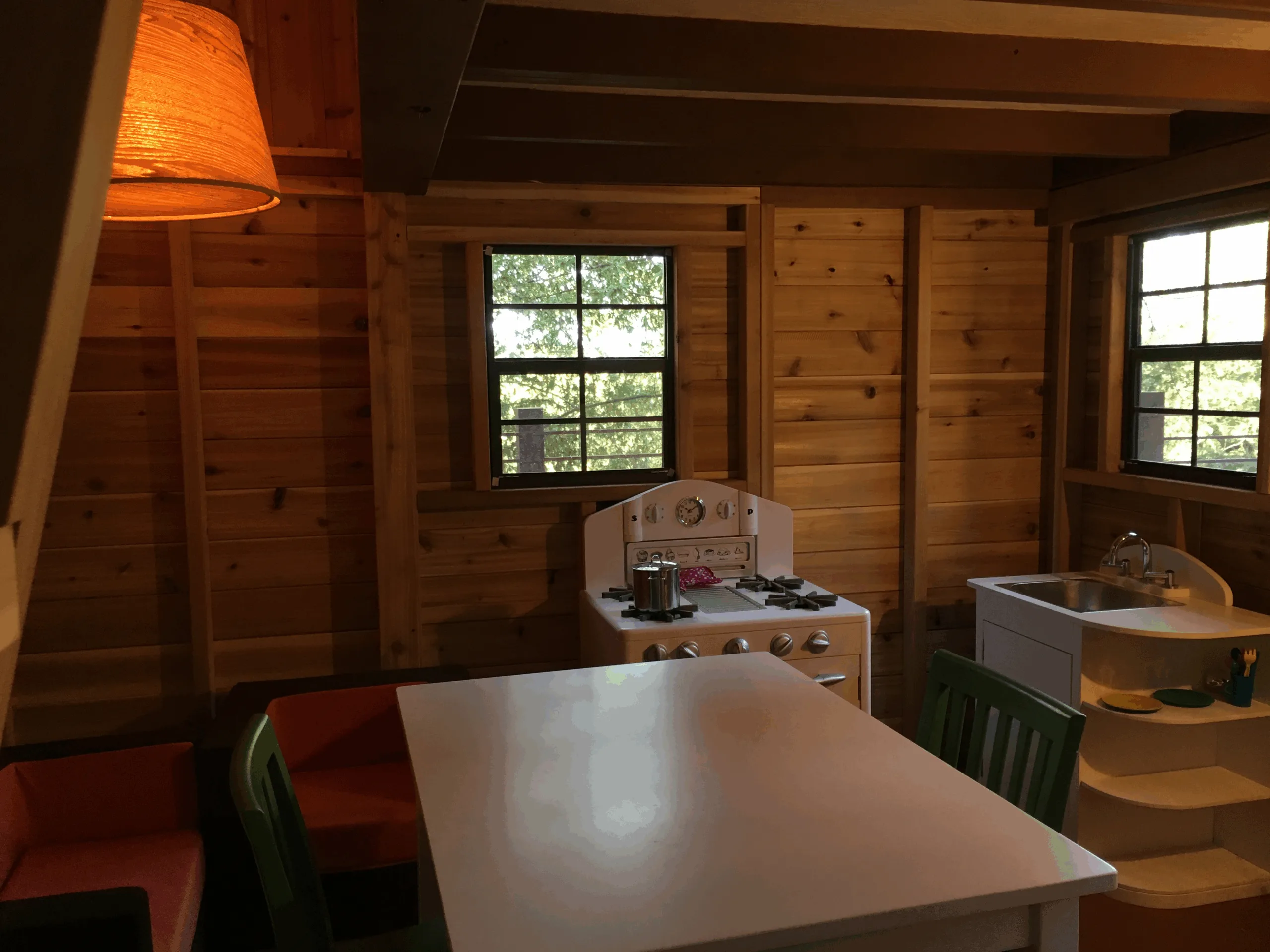
3. The Kids’ Playhouse

Turn your shed into a dedicated play space for the kids.

If you’re handy with tools, install cabinets, counters, and durable flooring to make a cedar playhouse that grows with them.

You can also insulate and add power to create a year-round playroom. Cedar’s natural resistance to decay and insects keeps the space safe and long-lasting.


💡 DIY idea: Stock the space with art supplies, toy storage, and cozy reading corners.
Playhouse 1.png

4. The Outdoor Bar or Kitchen

If you love hosting, a cedar shed bar or kitchen can take your outdoor entertaining to the next level. Add a counter, a mini fridge, and shelves for glassware or snacks.

Using your shed as prep space keeps everything close by and saves endless trips to the main kitchen during BBQ season.


💡 Hosting tip: Extend your shed’s overhang to create a shaded serving area for guests.

image6 scaled.png

5. The Pool House

If you have a pool or hot tub, a cedar pool house makes life easier and more elegant. It gives your guests a place to change or dry off without tracking water indoors.

Cedar’s natural oils resist moisture and weather, keeping your pool house beautiful through every season.


💡 Design tip: Add towel hooks, waterproof flooring, and a small bench for a spa-inspired touch.

cb96ca scaled.png

Imagine the possibilities for your next “garden shed”

A garden shed doesn’t have to be just for tools and storage. With a little creativity, it can become a true extension of your home — a functional outdoor living space that fits your lifestyle. Whether you’re working from home, relaxing, or entertaining, a Western Red Cedar shed offers endless possibilities.

At Outdoor Living Today, our sheds are handcrafted in Canada from sustainably sourced Western Red Cedar, known for its natural beauty, strength, and long-lasting durability. From spacious 12×16 models to compact backyard studios, each structure is designed to adapt to your needs.

What space is your home missing? A thoughtfully designed cedar shed might be the perfect way to bring comfort, style, and function to your backyard.

Read More

How Urban Dwellers Can Embrace Patio Gardening with Outdoor Living Today’s Urban Raised Garden Beds

Living in a condo often means sacrificing certain luxuries, like a backyard or ample green space. But with Outdoor Living Today’s Urban Raised Garden Beds, condo dwellers can enjoy the joys of gardening right on their patios. Tailored for small, urban spaces, these raised garden beds transform patios into lush mini-gardens, allowing you to experience the serenity and satisfaction of cultivating plants in a manageable, stylish setup.

Why Garden on a Condo Patio?

Urban condo living brings many benefits—convenience, vibrant city life, and efficient spaces. However, access to private outdoor space can feel limited, leaving many longing for a personal connection with nature. Patio gardening with raised garden beds offers condo dwellers an easy way to enjoy fresh herbs, flowers, and even vegetables, creating a green oasis in the city. This shift towards condo patio gardening is more than just practical; it’s an opportunity to cultivate a calming hobby, improve air quality, and create a beautiful outdoor focal point right outside your door.

The Perfect Garden Beds for Condo Patios

The Urban Raised Garden Bed 4×1.5 and 6×3 models from Outdoor Living Today have been designed specifically with urban spaces in mind. Both models come equipped with floors, allowing condo residents to enjoy gardening on patios and balconies without worrying about water runoff or damage to patio surfaces.

  • 4×1.5 Raised Garden Bed: This compact bed is ideal for smaller condo patios, providing just the right amount of space for a variety of herbs or small plants. It’s perfect for those new to gardening or anyone looking for a low-maintenance way to add greenery to their space.Urban Garden Bed 4x1.5 7
  • 6×3 Raised Garden Bed: For those with larger patios, the 6×3 model offers ample room to grow a wider range of plants, from leafy greens to flowers. It creates a lush, garden-like feel on any patio, bringing a touch of the backyard to your high-rise view.Urban RB63 2 1

Each model’s raised structure means plants are kept at an accessible height, making gardening enjoyable without the hassle of kneeling or bending, especially in a compact setting.

Benefits of Condo Patio Gardening with Raised Beds

1. Clean and Convenient Design

One of the biggest concerns with condo gardening is preventing mess on shared outdoor areas. The built-in floors of these raised beds help control soil, water, and fertilizer, ensuring that your garden stays tidy and manageable. This feature makes them an ideal choice for condos where you may need to be considerate of neighbors below.

2. Optimized Use of Space

For condo residents, every inch counts. These raised beds are designed to optimize small patio spaces, letting you cultivate a variety of plants without crowding. Vertical gardening options allow you to make the most of limited square footage, and the raised design provides extra storage for gardening tools underneath.

3. Easy Access and Minimal Upkeep

With the raised garden beds’ accessible height, tending to plants becomes easy and enjoyable. These models allow condo gardeners to experience the therapeutic benefits of gardening without requiring a large outdoor area. The compact, elevated design makes it easy to control pests, weeds, and watering, resulting in a healthier, low-maintenance garden.

4. Built for Urban Weather

Constructed from durable, naturally rot-resistant Western Red Cedar, these garden beds can withstand various weather conditions, making them perfect for exposed patios. Cedar’s natural resilience offers long-lasting beauty and function, even in urban environments where space and weather can be a challenge.

Building a Lifestyle with Patio Gardening

Adding greenery to your condo patio is about more than just beautifying your space; it’s about adopting a mindful, sustainable lifestyle. Patio gardening is a form of eco-friendly living, reducing your reliance on store-bought herbs or veggies while lowering your environmental footprint. Imagine the joy of cooking with fresh herbs you’ve grown or enjoying vibrant flowers as you relax on your balcony with city views.

Condo gardening can become a rewarding ritual that fits seamlessly into your daily routine, even in a busy urban setting. As you nurture your plants, you’re also nurturing a small sanctuary of calm and focus—a refreshing contrast to the city’s hustle.

Start Your Urban Gardening Journey

Outdoor Living Today’s Urban Raised Garden Beds make it easier than ever for urban residents to embrace the joys of gardening. With stylish, space-conscious designs that fit perfectly on a condo patio, these beds are designed to offer a taste of the outdoors, even in high-rise living. Embrace the beauty and benefits of a green space that’s truly your own, creating a vibrant, lush patio garden that reflects the best of city life—simple, beautiful, and alive with nature.

Read More

How School Gardens Support Hands-On Learning and Real-World Skill Development

How school gardens support hands-on learning, stronger engagement, and real-world skill development.

In recent years, educators have been looking for new ways to bring learning outdoors. Studies continue to show that time spent in nature improves student focus, confidence, and overall well-being. Schools are now embracing outdoor education as a meaningful part of the learning experience.

One initiative that has taken off is the use of garden beds in schoolyards. Raised garden beds give students a chance to explore science, food systems, and environmental responsibility in a hands-on way. Outdoor Living Today, a Canadian manufacturer of quality Western Red Cedar garden products, offers durable solutions schools can rely on year after year.

In this guide, we explore the educational benefits of school gardens and walk through a simple process for setting them up.

The Educational Benefits of School Gardens

School gardens offer more than a place to grow vegetables. They give students real-world experiences that traditional classroom lessons cannot always provide. Research by the American Horticultural Society shows that garden-based learning helps improve academic performance, increases physical activity, and enhances social-emotional skills.

Some of the key benefits include:

Stronger Academic Learning

Gardens naturally support core subjects.

  • Science and biology come alive when students investigate soil, plant growth, and ecosystems.
  • Math skills are reinforced through measuring, spacing plants, and tracking growth data.
  • Environmental studies become grounded in real experiences that students can observe daily.

Hands-On, Experiential Learning

Students retain information better when they learn by doing. School gardens encourage curiosity, experimentation, and problem-solving.

Healthy Eating Habits

When students grow their own food, they are more likely to try fresh vegetables and understand where food comes from. A study from Cornell University found that children involved in garden programs were significantly more willing to eat healthy produce.

Social and Emotional Growth

Gardening teaches responsibility, teamwork, patience, and confidence. Students develop a sense of pride when they see the results of their work.

Guide to Setting Up Garden Beds for Schools

Here is a step-by-step guide to help schools launch a garden program smoothly and successfully.

1. Plan and Design

  • Identify the ideal location for the garden beds. Consider sunlight, accessibility, water supply, and safety.
  • Choose the number and size of beds based on your available space. Raised garden beds made from Western Red Cedar offer natural resistance to decay and can last for many years outdoors.
  • Include teachers, students, and local gardening experts in the planning process to gather ideas and insights.

2. Get Permissions

  • Secure necessary approvals from school administrators or district officials.
  • Share the garden’s learning benefits with the school community to build excitement and support.

3. Gather Supplies

Your basic supply list may include:

  • Raised garden beds
  • Soil and compost
  • Seeds and seedlings
  • Watering tools or an auto-watering system
  • Basic gardening tools

Consider collaborating with local businesses or community members who may be willing to donate supplies or sponsor a bed.

4. Integrate the Garden into the Curriculum

Connect gardening activities to your lesson plans.


Examples include:

  • Science: plant life cycles
  • Math: measuring and spacing
  • English: journaling observations
  • Environmental studies: sustainability and ecosystems

5. Student Involvement

Let students participate in each stage. Allow them to create planting plans, sketch bed layouts, and share responsibilities. This strengthens ownership and engagement.

6. Plant Selection

Choose plants that grow well in your region and match the season.
Consider mixing vegetables, herbs, and flowers to enrich the learning experience.

7. Provide Learning Resources

Create a small gardening library with children’s books, videos, and worksheets.

Invite local horticulturists or master gardeners for workshops or demonstrations.

8. Maintenance and Care

Establish a routine for watering, weeding, and pest control.
This is a great time to teach students about sustainable gardening practices, soil care, and composting.

9. Harvest and Celebrate

Plan a small harvest celebration to acknowledge the students’ hard work.
Produce can be used in school meals, classroom tastings, or donated to the community.

10. Evaluation and Reflection

Encourage students to reflect on what they learned. Collect feedback from teachers and staff to understand the garden’s impact and opportunities for improvement.

Why Raised Cedar Garden Beds Are Ideal for Schools

Western Red Cedar is a natural, non-toxic wood that stands up to outdoor weather and is safe for food-growing environments. Its durability reduces long-term maintenance costs, making it a smart investment for schools.

Benefits of cedar for educational gardens include:

  • Natural resistance to rot
  • Long outdoor lifespan
  • No chemical treatment required
  • Safe for growing vegetables
  • Beautiful, warm appearance that enhances school spaces

Ready to Start Your School Garden?

Read More

Learn why finger-jointed cedar is becoming a preferred choice for outdoor structures, siding, and custom builds.

Western Red Cedar has long been admired for its natural beauty, longevity, and remarkable resistance to decay. As woodworking and material efficiency evolve, builders and homeowners are turning to new ways to get the most out of this premium species without compromising performance or aesthetics.

One such innovation is finger-jointed Western Red Cedar — a technique that allows shorter cedar pieces to be joined into longer, stronger, and more dimensionally stable boards. The result is a material that maintains the warm character of real cedar while offering improved consistency and reduced waste.

In this blog, we break down how finger-jointing works, what makes it unique, and why it’s becoming a preferred choice for outdoor applications.

What Is Finger-Jointed Western Red Cedar?

Finger-jointing is a woodworking process where short lengths of high-quality cedar are precision-cut with interlocking “fingers” and bonded together to create long, stable boards.

This technique:

  1. maximizes usable cedar material
  2. enhances dimensional stability
  3. reduces warping, twisting, and splitting
  4. supports sustainable wood utilization

The result is a product that looks seamless once finished and performs exceptionally well in both interior and exterior settings.

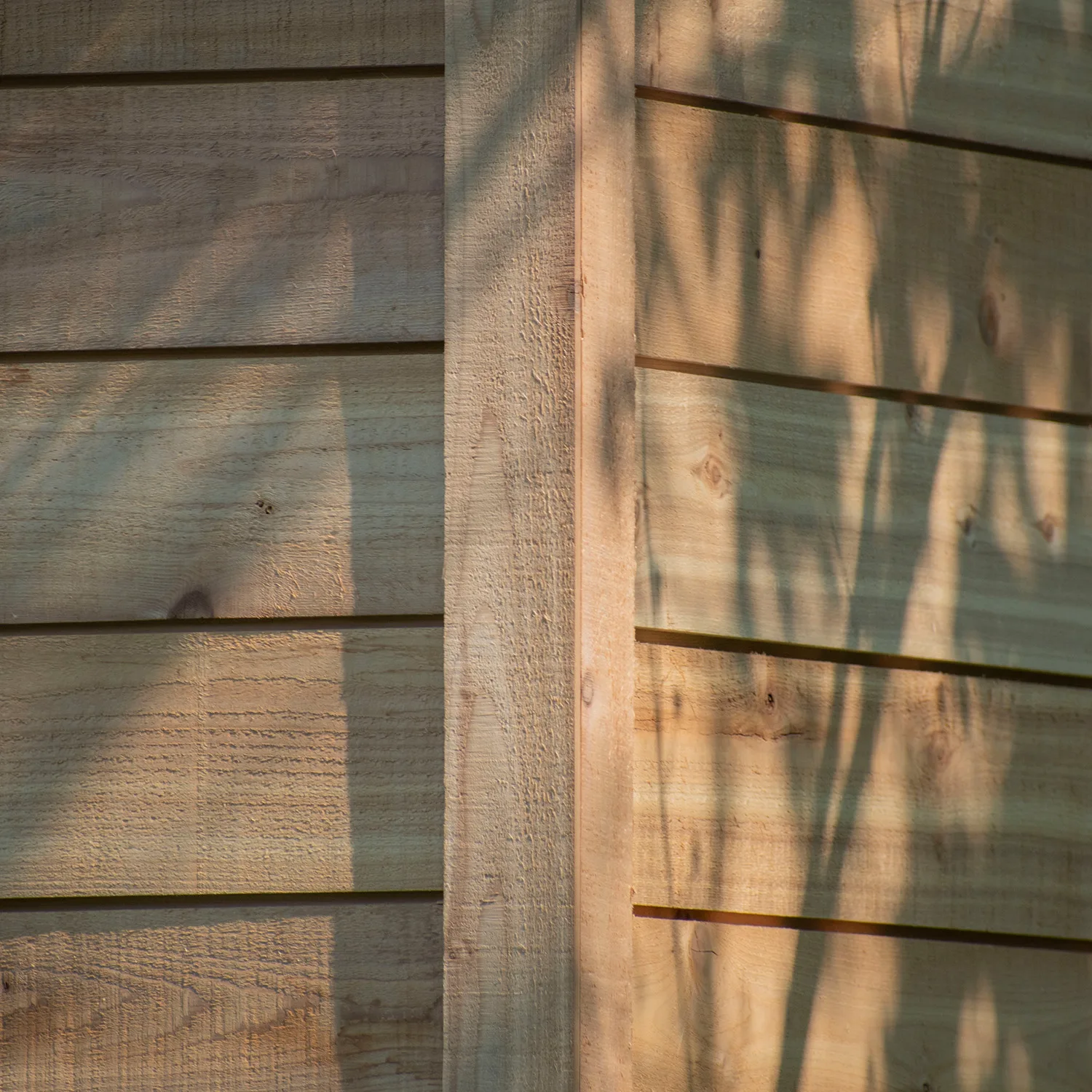
Wooden shed with shadow patterns.

Why Finger-Jointed Cedar Matters

Western Red Cedar’s natural attributes — its resistance to rot, insects, and moisture — are preserved even when finger-jointed. By optimizing shorter cedar offcuts, manufacturers can deliver stronger, more uniform material while reducing waste.

This makes finger-jointed cedar an environmentally mindful choice that aligns with today’s sustainable building practices.

The Benefits of Finger-Jointed Western Red Cedar

1. Strength and Stability

Finger-jointing significantly reduces the chances of bowing, twisting, or cracking. The interlocking “fingers” help distribute stress evenly, creating boards with excellent structural reliability — ideal for projects requiring longevity.

2. Cost Efficiency

Because the process uses shorter cedar sections, material waste is minimized. This can make finger-jointed cedar more cost-effective, especially for painted applications or large-scale builds.

3. Consistent Dimensions

Each board is crafted to precise, uniform dimensions. This leads to:

  1. easier installation
  2. fewer material variations
  3. a polished, professional finish

Contractors and DIY builders often appreciate the predictability these boards provide.

4. Natural Resistance to Decay

Western Red Cedar’s inherent durability remains intact in finger-jointed form. It still resists moisture, insects, and decay, making it highly suitable for outdoor structures, siding, and trim.

5. Aesthetic Appeal

Its signature reddish-brown tone offers warmth and sophistication. Over time, it gracefully ages into a silver-gray patina, delivering timeless visual appeal in both traditional and modern designs.

6. Versatility for Many Project Types

Finger-jointed Western Red Cedar is used across:

  1. siding and paneling
  2. trim and fascia
  3. outdoor structures
  4. interior decorative accents

Its adaptability allows it to complement various architectural styles: rustic, modern, contemporary, and everything in between.

Explore Cedar Options for Your Next Project

Discover high-quality, sustainably harvested Western Red Cedar products built for beauty, longevity, and performance.

Read More

Setting Up Your Fall Garden: Tips, Tricks, and Greenhouse Cover Essentials

As summer cools down, many gardeners assume the season is over. In reality, fall can be one of the most rewarding times to be out in the garden. Cooler days, softer light, and fewer pests all work in your favor. With a little planning – and the right protective tools – you can keep beds productive well into the colder months.

One of the most effective tools for fall gardening is the greenhouse cover. Whether it’s a simple row cover, a hoop-style mini greenhouse, or a full cover for raised beds, these structures create a gentler microclimate that helps plants thrive when temperatures start to drop.

In this blog, we’ll walk through how to set up your fall garden, why greenhouse covers matter, and practical tips to help your space look good and grow well right up to winter.


1. Fall: A Season of Renewed Growth

Fall isn’t just the “end” of the gardening year. It’s a reset.

As temperatures drop, many plants shift energy from leaves to roots. This helps them build strong foundations that carry them through winter and into spring. By planting and preparing in the fall, you give your garden a head start for next year.

Think of fall gardening as:

  1. Root-building season: Cooler soil encourages deeper, stronger root systems.
  2. A chance to declutter: You can clear tired summer crops and make room for fresh plantings.
  3. A planning window: What worked this year? What didn’t? Fall is the perfect time to adjust and improve your layout.

With a bit of structure, your fall beds can be both productive now and better prepared for spring.


2. Choosing the Right Crops

Successful fall gardens start with cool-season varieties that tolerate chilly weather and even benefit from light frost.

Great fall crops include:

  1. Kale, spinach, lettuces
  2. Carrots, beets, radishes
  3. Broccoli, cauliflower, cabbage
  4. Cold-hardy herbs like parsley and cilantro

Check frost dates, plant in small waves for continuous harvests, and pair upright greens with root crops to maximize raised bed space.


3. Greenhouse Covers: Your Fall Advantage

Greenhouse covers create a stable, protected microclimate that helps your plants thrive as temperatures drop.

Benefits include:

✓ Frost Protection

Shields tender plants from early frost and sudden cold snaps.

✓ Temperature Stability

Reduces daytime-to-nighttime temperature swings, supporting steady growth.

✓ Pest Control

Acts as a barrier against fall pests without the need for sprays.

✓ Better Moisture Retention

Minimizes evaporation, keeping soil evenly moist for longer.

✓ Extended Growing Season

With protection, many crops last weeks — even months — beyond the usual fall timeline.


4. How to Set Up Your Greenhouse Covers

✓ Choose a Quality Cover

Select covers that allow light in, retain warmth, and fit your garden’s size and shape.

✓ Install Securely

Firmly anchor frames and edges to withstand wind and rain. Ensure there’s enough height for plants to grow comfortably.

✓ Monitor & Vent

Open vents or lift part of the cover on warm days to prevent overheating, then secure it again before evening.


5. Add Fall Style to Your Garden

Your fall garden can be productive and beautiful. Add pumpkins, seasonal decor, and vibrant cold-hardy greens around your covered beds to create a cozy, autumn-inspired space that stands out in your yard.


Extend Your Growing Season Even Further

Give your plants the protection they need this fall.

Read More

Sugi vs. Western Red Cedar

Understanding the Differences Between Two Popular Softwoods

When it comes to choosing wood for outdoor structures, interior finishing, or specialty woodworking projects, both Sugi (Japanese Cedar) and Western Red Cedar stand out for their beauty, durability, and unique performance characteristics.

While these two species share similarities—such as their resistance to rot and insects—they differ in origin, appearance, density, scent, and long-term stability. This guide provides a balanced, educational comparison to help you understand how each wood performs and when one may be preferred over the other.

What Is Sugi?

Sugi refers to the timber harvested from the Japanese cedar tree (Cryptomeria japonica), a tall evergreen conifer native to Japan. It has been used for centuries in traditional Japanese architecture, including temples, shrines, houses, and interior paneling.

Key Characteristics of Sugi

Lightweight with straight grain: Typically pale yellow to light brown, sometimes with soft reddish tones.

Naturally resistant to decay, insects, and fungi.

Fine texture and smooth appearance.

Cultural significance: The wood holds deep historical value in Japanese craftsmanship.

Used in many industries: Construction, interior paneling, furniture, and specialty woodworking.

Overall, Sugi offers a balance of durability and workability, making it valued both in Japan and internationally.

What Is Western Red Cedar?

Western Red Cedar (Thuja plicata) grows along the Pacific Northwest coast of North America, including British Columbia, Washington, and Oregon. Known for its rich color, aromatic scent, and exceptional outdoor performance, it is widely used for exterior applications.

Key Characteristics of Western Red Cedar

Warm reddish-brown tones with distinct grain patterns.

Outstanding natural resistance to rot, decay, and insects due to its high extractive content.

Low density and dimensional stability—cedar moves less with moisture changes.

Long lifespan outdoors, especially in wet or variable climates.

Strong cultural and economic value in North American woodworking traditions.

Western Red Cedar is commonly used for sheds, siding, fencing, pergolas, garden beds, greenhouses, and outdoor furniture.

Sugi vs. Western Red Cedar: A Side-by-Side Comparison

Species & Origin

Sugi: From Cryptomeria japonica, native to Japan.

Western Red Cedar: From Thuja plicata, native to the Pacific Northwest.

Both are softwoods with long histories of structural and cultural use.

Appearance

Sugi: Light yellow–brown, sometimes reddish; fine, straight grain; soft visual tone.

Western Red Cedar: Rich reddish-brown; more pronounced grain patterns; deeper, warmer aesthetic.

Which is better?Neither—this is personal preference. Cedar offers more color variation; Sugi offers a lighter, more uniform look.

Durability & Decay Resistance

Both species contain natural oils that protect against fungi, insects, and moisture.

Sugi: Naturally durable but slightly softer overall. Performs well outdoors when properly maintained.

Western Red Cedar: One of the most decay-resistant woods available. Ideal for wet, coastal, or variable climates.

Subtle advantage: 

Western Red Cedar, especially for long-term outdoor exposure.

Density & Weight

Sugi: Very lightweight (similar to pine), easy to cut and handle.

Western Red Cedar: Also lightweight, but slightly higher density than Sugi.

Real-world impact:Cedar’s density gives it better stability outdoors; Sugi’s lower density makes it easier to work with indoors.

Uses & Applications

Sugi is commonly used for: framing, flooring and interior finishing, traditional Japanese building, and furniture and small woodworking projects.

Western Red Cedar is commonly used for: outdoor structures (sheds, pergolas, fences, greenhouses), decking and siding, garden beds and outdoor furniture, trim, paneling, and architectural accents.

Subtle advantage: 

Cedar excels specifically in harsh outdoor environments.

Scent & Aromatic Qualities

Sugi: Emits a mild, sweet, pleasant scent; valued in Japanese culture for its calming aroma.

Western Red Cedar: Known for its rich, distinctive aroma—often described as fresh, warm, and naturally protective (its scent comes from oils that repel insects).

BZ1220 SS 1Oscar 63 Western Red Cedar Bike and Waste management shed Outdoor Living Today 5Western Red Cedar Bayside Gazebo Outdoor Living Todayimage6 18x8 Outdoor Living Today Western Red Cedar Garden Shed 7IMG 6674.JPEG12x12 Sunshed Garden Shed Greenhouse Shed Western Red Cedar Shed Outdoor Living Today 17pgrb63 greenhouse olt 4
Read More

Everything You Need to Know Before Setting Up Your First Greenhouse

For many gardeners, the growing season feels frustratingly short. Spring arrives late, fall comes early, and unpredictable weather — from heavy rain to surprise frost — can derail even the best-planned garden. Add in pests, poor soil conditions, or limited outdoor space, and it becomes clear why more gardeners are turning to greenhouses.

A greenhouse creates a controlled micro-environment that lets you grow healthier plants, experiment with new varieties, and extend your growing season well beyond what’s possible outdoors. Whether you're nurturing seedlings, growing heat-loving crops, or cultivating year-round herbs, the right greenhouse makes all the difference.

Outdoor Living Today’s Western Red Cedar greenhouses blend sustainability, craftsmanship, and smart design — helping gardeners create thriving plant environments that last for years.

This guide walks you through the essential steps to prepare for greenhouse gardening, so you can grow with confidence — from choosing the right style to managing climate, soil, water, and plant health.


Selecting the Right Greenhouse

What to Consider When Choosing Your Greenhouse

Before you plant your first seed, start by choosing the greenhouse that best supports your gardening goals. Consider your available outdoor space, budget, and the types of plants you plan to grow. This ensures you choose a structure that fits comfortably into your yard and supports the temperature, humidity, and light needs of your plants.

Outdoor Living Today offers a range of greenhouse sizes, including 8×8, 8×12, 12×12, and 12×16 Western Red Cedar Greenhouses and SunShed models. Each provides excellent durability, natural insulation, and timeless beauty.


Site Selection and Preparation

Choosing the right location is just as important as choosing the right greenhouse. This determines how much light your plants receive, how warm the interior becomes, and how efficiently you can maintain your greenhouse year-round.

Tips for Ideal Site Placement

Maximize sunlight exposure: Choose a location that receives full sun, ideally facing south for maximum winter light.

Remove obstacles: Clear away debris, low-hanging branches, or structures that may cast shadows.

Ensure a level foundation: A solid, level base prevents uneven settling and improves long-term structural integrity.

Prevent weed encroachment: Install a weed barrier to stop invasive plants from creeping into your greenhouse base.

Raised Garden Bed Greenhouse cover 3

Sustainability: Why Cedar Makes a Difference

Western Red Cedar is one of the most sustainable greenhouse materials available. Harvested from responsibly managed forests in Canada and the United States, cedar has a naturally low environmental impact compared to synthetic or chemically treated materials.

Why Western Red Cedar is the Sustainable Choice

Naturally rot-resistant thanks to its oils (no chemical treatments required)

Long lifespan outdoors, reducing replacement waste

Low density, meaning cedar moves less in fluctuating temperatures

Lower environmental footprint during processing than many alternative materials

According to forestry researchers, responsibly managed cedar forests help ensure long-term ecological stability through controlled harvesting and regeneration.


Climate Control and Ventilation

Maintaining proper temperature and airflow is the key to greenhouse success. Without ventilation, heat and humidity can quickly build up — stressing plants, inviting pests, and promoting fungal diseases.

Outdoor Living Today’s greenhouses make ventilation easy with adjustable roof vents, allowing gardeners to regulate interior temperatures naturally.

Climate Control Tips

Open vents during hot afternoons to prevent overheating.

Use circulating fans to reduce stagnant air pockets.

Monitor humidity levels — excess moisture can lead to powdery mildew or mold.

Use automatic vent openers for consistent climate control.

Regulating temperature and humidity inside protected agriculture structures greatly reduces disease pressure and improves plant health.


Irrigation and Water Management

Greenhouse plants often require more consistent moisture than outdoor plants. However, overwatering is equally dangerous — leading to root rot, fungal issues, or nutrient leaching.

Best Practices for Greenhouse Watering

Use misting nozzles for humidity-loving plants like seedlings.

Consider a rainwater collection system (e.g., barrel kits) for sustainable irrigation.

Ensure proper drainage to prevent standing water and soil saturation.

According to industry data, greenhouse structures can reduce overall water use due to controlled irrigation and reduced evaporation.

Raised Garden Bed Greenhouse cover 4

Soil and Plant Selection

Greenhouse plants often require more consistent moisture than outdoor plants. However, overwatering is equally dangerous — leading to root rot, fungal issues, or nutrient leaching.

Choosing the right soil and plants is crucial for greenhouse success. The enclosed environment allows for better growth control — but it also requires that soil quality and plant selection be intentional.

Soil Tips

Use high-quality, well-draining soil enriched with organic matter.

Test soil pH and nutrients periodically to maintain optimal growth conditions.

Ensure soil has enough perlite, compost, and structure to support root systems.

Plant Selection Tips

Choose plants suited for greenhouse growing, including herbs, leafy greens, tomatoes, peppers, cucumbers, citrus, and specialty flowers.

Start seeds indoors in trays and transplant young plants when roots are established.

For quicker results, purchase healthy nursery plants and acclimate them to the greenhouse environment gradually.

Gardening Raised Bed Greenhouse 6x3 4 web.jpg

By incorporating a thoughtfully selected and well-prepared greenhouse into your gardening routine, you unlock a world of growing opportunities — from extending your growing season to cultivating healthier, stronger plants year-round.

With Outdoor Living Today’s Western Red Cedar greenhouses, you’re choosing a structure built for durability, sustainability, and long-term performance. Pair that with smart site selection, proper irrigation, balanced soil, and good climate management, and your greenhouse becomes a thriving oasis in every season.


Ready to create your own backyard greenhouse sanctuary?
Explore our full range of cedar greenhouses and start growing with confidence!

Read More

Would you like to know how to build a playhouse? Building a playhouse and building a house are the same – it is just that a playhouse is on a slightly smaller scale. To make things simple, you can make the little house’s dimensions match the pre-cut lumber that you will be picking up from the home improvement store.

A plywood sheet is 4×8 feet and 2x4s in 8-ft lengths is perfect for a playhouse. So your little house will have a length of 8 feet with 4 foot walls and a roof. This will be a lot less math and minimal work, and your kids will love you for it!

Items You will Need

Shovel
Drill driver
Circular saw
4×4 pressure treated lumber
4×8- foot plywood sheets
2×4 lumber
Joist hangars
Pick
Speed square/rafter square
Landscaping cloth
Sandpaper

Lay the foundation: You will be keeping things simple, but it is still important to start off right. First, find a place in the yard where there is enough room for the playhouse, making sure that the ground is mostly flat already. Take your shovel and pick, break up the earth and making it level and compact. Make a weed barrier by laying down a sheet of landscaping cloth.

You may not want to build a playhouse directly on the ground. The moisture and earth will rot away the foundation of the playhouse just like it would a normal house.

Frame the floor: The next step is to set two pressure treated 4x4s (the 8-foot ones) on the foundation. Then cut four 4x4s of 4 feet each to fit between the 8-foot 4x4s. Attach the pieces together with joist hangars. This job is best done with pressure treated lumber because it is going directly on the ground, and that will ensure that it is protected from the elements as already mentioned.

You may want to have a cement foundation. You can look online or hire someone who knows more about that.

Frame the side walls: Make the bottom and top of each wall with two 8-foot 2x4s. Make the walls 4-feet high by cutting ten 2×4 studs and keep in mind that the width of the 8-footers need to be accounted for. You will need to make the studs 4 feet, taking away 1½ inches, which is a 2×4’s actual width, so 3 feet 10½ inches. Now, you can lay the lumber on the ground and screw the studs to the plates both on the bottom and top. Keep them 24 inches apart on each center.

There will be 5 studs on each wall. Next, drill a hole of 5/8th inches in the bottom plate in the open bay that is between each stud and drill another hole corresponding to the previous, in the foundation’s 8-foot lengths. As you make the walls stand up on the foundation, drive in a 5/8-inch sized bolt through each of the pre-drilled holes. To prevent the walls from falling outward or inward, secure a 2×4 between them temporarily.

Install the floor: The space between the walls should be perfect for a sheet of plywood, meaning it should be 8 feet in length and 4 feet across. Lay a sheet in the space and every foot or so, screw it into the foundation. While the walls are still open, this is the right time to install an indoor or outdoor carpet if you wish to.

Frame the walls: It is now time to frame the front and back walls. Build the end walls the same way that you did the side walls, but with the top and bottom plates at 4 feet. Each wall requires four 3-foot 10 ½ -inch studs, set so that bay in the square’s center is 2 feet wide. Drill 5/8 holes in the outer bays only and then stand the walls up and bolt them down. Next, screw the studs together where they meet at the structure’s corners and you can remove the temporary support.

Frame the roof: For this, 10 rafters (5 on each side) are required, so they match up with the studs you screwed on the side walls. Cut ten 2x4s to 2-feet 15/16 inches with an angle of 45 degrees on each end. To get the angles, mark them with a speed square/rafter square or use a miter saw.

Now match two rafters up, making a V and screw them through the angle. There should be 5 Vs in the end. Set the Vs on the side walls’ top plate so that they match the studs and screw them down. Finally, make a ridge beam by setting an 8-foot 2×4 the length of the roof in the rafters’ angle abs screw it down to each rafter.

Now, you have a completed playhouse skeleton, so the next steps are to skin the side walls, front and back walls and the roof with the plywood sheets. Once you have done that, sand down the rough edges so that the little ones do not get splinter in their skin. That can be unpleasant and ruin the day!

After that, you can add the finishing touches and give it the look you want. You can give it a rustic or polished finish – that is all up to you! You can get the kids involved by letting them help you paint the wood to protect it. If you can make it match your actual home, that could look pretty sharp! You can have loads of fun with your new playhouse.

Build a Playhouse

Read More

Do you want to know how to secure your shed? Many people assume that their shed does not need protection. After all, it is nothing more than a storage shack where you keep out-of-season items. But while that lawn mower that you have been storing in your shed for many years may not be of much value on its own, have you considered the accumulated worth of the other contents in your shed – gardening gear, power tools, bikes, electrical cord, portable lights, rope, and lots more.

Despite many valuable items such as these stored in them, sheds are rarely secured properly. Whether or not your shed is attached to your home, you should make sure that the same level of security is provided to it as the rest of your property.

Here are a few tips to help ensure that your shed is as safe and secure as the rest of your home and the surrounding property.

Minimize the Risk of Structural Weaknesses: When there are obvious loose slats and patches of rot, your old shed will be able to provide very minimal defense against thieves. The first thing you need to do is identify the problem areas in the shed. Use new panels to reinforce the internal structure and make sure that you fix loose slats as well.

Replace rotten doors and windows and also patch up holes that you see on your roof. Secondly, make sure that your shed is difficult to for criminals to access. Always keep fence openings closed and secure that are around your yard, use thorny plants as a deterrent, by planting them around the shed and if you have overgrown shrubs surrounding your shed, trim them regularly so that they cannot be used as hiding places.

Replace Old Locks: Because many homeowners do not give importance to the security of their sheds, they use old locks. If traditional security is your preferred option, you should replace the old fastener with the strongest hasp and staple you can find with coach bolts. Next, add a strong padlock – preferable one that is rust-resistant or weatherproof – and make sure that you use it each time you close your shed.

Always remember that the harder you make it for a thief to enter your shed, the less likely they will be to try intruding in the first place, because it increases their chances of getting caught. If you prefer a more high-tech option, you should consider investing in an electronic door lock.

Secure Window AC Units: If the window AC units in your shed are not properly secured, burglars looking for access can quickly and easily remove them. You can make sure that it is much more difficult to remove your AC unit by installing a support mechanism that attaches to the exterior wall of your shed.

Although it may take a little more work, you should make sure that you also add a support bracket that can be securely screwed into the wall. This will make it extremely tough for any burglar to move the AC. Once the bracket has been installed, you should also invest in a window security bar. These are affordable improvements that can effectively prevent potential intruders from opening the window above the unit.

Replace Old Hinges: When the hinges of your shed door are exposed and loose, it makes them easy for criminals to unscrew. When this happens, the first thing you should do is replace those old hinges with a set that comes with a non-removable pin. You should look for carriage screws or coach bolts to install the hinges as well, because these types of fasteners come with smooth heads and cannot be removed from the outside once they are screwed in. This will make your shed door stronger and more secure, deterring potential intruders from trying to break in.

Poor Lighting: If your shed is situated in a corner of your yard where it cannot be reached by the porch light, it will make it difficult to see what is going on during the night. The best solution is to invest in motion detector lighting and have it installed. No criminal wants the spotlight on them so this will keep them away for sure. Depending on the strength and range of your lighting, it may also help in deterring intruders from the rest of your property.

There are many effective ways to make sure that your garden shed is properly secured and the items inside are safe. While some are expensive, you will find many affordable and easy ways to secure this structure. They will ensure that potential criminals have a hard time accessing your shed and getting their hands on your hard-earned property.

You can make sure that the equipment, tools, and other items that you store in your shed are safe from the hands of burglars and thieves. So do not neglect your shed and find ways to ensure that it is secure at all times.

How To Secure Your Shed

Read More