May 31, 2016

Understanding the Differences in Durability, Sustainability, and Long-Term Value!

When choosing a garden shed, material matters more than many homeowners realize. While size and style often get the most attention, the material your shed is made from plays a major role in how long it lasts, how it performs outdoors, and how it impacts the environment.

Two of the most common options are wooden sheds and plastic sheds. While both serve basic storage needs, they differ significantly in sustainability, durability, maintenance, and overall value.

This guide breaks down those differences so you can make a confident, informed decision.

Why Shed Material Choice Matters

A shed isn’t just a storage box — it’s a permanent outdoor structure exposed to moisture, temperature swings, UV rays, and seasonal wear. The right material will:

  1. Stand up to weather year after year
  2. Maintain structural integrity over time
  3. Reduce long-term replacement and maintenance costs
  4. Align with environmental and sustainability values

Understanding what goes into each material helps avoid costly surprises down the road.

Wood vs Plastic Sheds: A High-Level Comparison

Wooden Sheds

  1. Made from natural, renewable materials
  2. Can act as a carbon sink
  3. Offer strength, rigidity, and customization
  4. Age naturally and can be refinished or repaired

Plastic Sheds

  1. Manufactured from petroleum-based products
  2. Lightweight and low-maintenance initially
  3. Limited repair options if damaged
  4. Prone to UV degradation over time

🌲 Sustainability and Environmental Impact

Wood: A Renewable, Carbon-Storing Material

Wood is one of the most environmentally responsible building materials available when sourced correctly. Trees naturally absorb carbon dioxide as they grow, storing carbon within their fibers.

When wood is harvested and turned into a shed, that carbon remains locked in the product for the duration of its lifespan. This makes wood a natural carbon sink.

Additionally:

  1. Wood requires less energy to process than plastic or metal
  2. It is biodegradable and recyclable at end of life
  3. Responsibly sourced wood supports managed forests

Plastic: High Emissions and Difficult Recycling

Plastic sheds are produced using fossil fuels and energy-intensive manufacturing processes. During production, large amounts of CO₂ are released directly into the atmosphere.

Other concerns include:

  1. Plastic is difficult and costly to recycle
  2. Many plastic sheds end up in landfills at end of life
  3. UV exposure can cause brittleness and fading over time

From a sustainability perspective, plastic sheds carry a significantly larger environmental footprint.

Durability and Long-Term Performance

Wooden Sheds

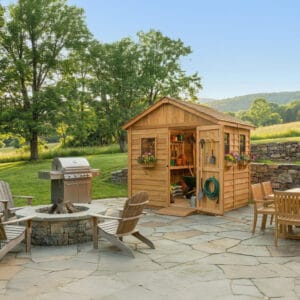
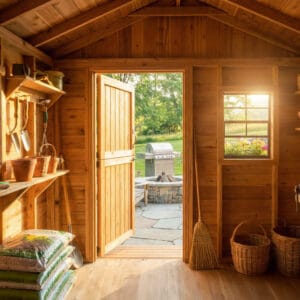
A well-constructed wooden shed can last for decades when properly designed and maintained. Certain wood species naturally resist rot, moisture, and insects, making them especially well-suited for outdoor use.

Key advantages:

  1. Strong structural performance
  2. Naturally breathable material
  3. Can be repaired, reinforced, or refinished
  4. Handles temperature changes without cracking

Wood sheds also maintain their appearance better over time, developing character rather than looking worn or brittle.

Plastic Sheds

Plastic sheds are often marketed as “maintenance-free,” but that doesn’t always mean long-lasting.

Common issues include:

  1. Warping or cracking in extreme heat or cold
  2. UV degradation leading to brittleness
  3. Limited load-bearing strength
  4. Difficulty repairing damage once it occurs

While plastic sheds may perform adequately in mild conditions, they often struggle in harsher climates.

Final Thoughts: Which Shed Is Right for You?

If your priority is:

  1. Long-term durability
  2. Environmental responsibility
  3. Structural strength
  4. Natural aesthetics

A wooden shed is the stronger long-term investment.

Plastic sheds may offer convenience upfront, but when factoring in lifespan, sustainability, and repairability, wood consistently delivers greater overall value.

Choosing the right shed material ensures your outdoor space stays functional, attractive, and reliable for years to come.

Authentic Western Red Cedar. Sustainably Sourced Crafted By Hand.

We offer free & Fast Shipping to The United States  & Canada

Made in Canada With Canadian & American Western Red Cedar.

Easy Assembly. Clear Instructions. Build Confidently With Step-by-Step Manuals.