November 21, 2015
A garden shed is one of the hardest-working structures in your backyard. It quietly weathers spring rain, summer heat, and fall cleanup—but winter is a different story. Snow, ice, freezing temperatures, and moisture can all take a toll if your shed isn’t properly prepared.
Because most people use their shed less during winter, seasonal damage often goes unnoticed until spring. Taking the time to winterize your shed in the fall helps ensure it stays sturdy, functional, and in great condition through the colder months—ready to welcome you back when warmer weather returns.
So how do you winterize your shed? A few proactive steps now can save you time, money, and repairs later.
Thorough Cleaning Comes First
Before winter sets in, give your shed a full cleanout. Over the growing season, sheds tend to become catch-all storage spaces for pots, tools, fertilizer, hoses, and equipment.
Start by removing everything from the shed so you can properly assess what you still need and what should be discarded. Broken pots, damaged tools, excess materials, and anything you no longer use should be disposed of. If you haven’t used an item in the last six months, it’s probably safe to let it go.
Once the shed is empty:
- Sweep the floor and remove dust, debris, and cobwebs
- Eliminate insects or pests that may have taken up residence
- Clean gardening tools thoroughly and store them in sealed plastic bags
- Drain garden hoses completely and coil them to prevent cracking
- Remove oil and gas from lawn equipment and cover machines with a tarp
- Store soil, fertilizer, mulch, and grass seed in sealed plastic containers to deter rodents
- Secure electrical cords so they don’t become tangled or damaged
A clean shed is not only easier to inspect—it also reduces the risk of pests and makes spring prep much easier.
Inspect and Repair the Interior
Once cleaning is complete, it’s time to inspect the inside of your shed for damage.
Check the floors, walls, and ceiling carefully. Look for small holes, cracks, or crevices and seal them with caulking to prevent cold air, moisture, and pests from entering during winter.
Pay close attention to:
- Areas behind shelves and wall-mounted hooks
- Window and door seals for cracks or worn weatherstripping
- Hinges and hardware that may need lubrication
If you have the time and budget, applying a fresh coat of paint to interior walls can refresh the space and help protect the wood. Waterproofing the floor is also a smart option if you store winter tools that may be damp from snow or ice.
Give the Roof Special Attention
Your shed roof takes the brunt of winter weather, so it deserves extra care.
Inspect the roof for signs of wear or damage:
- Metal roofs should be cleaned and treated to prevent rust
- Shingled roofs should have loose or broken shingles replaced
- Wooden roofs should be checked for warping, cracks, or insect damage
Replace any damaged panels and treat exposed wood to help prevent insects from boring into it. Cedar panels, commonly used in quality shed kits, are naturally resistant to pests and moisture, making them an excellent choice for long-term durability.
Also take time to:
- Replace rusted nails
- Reinforce loose panels
- Trim overhanging tree branches that could break under snow or ice and damage the roof

Fix and Protect the Exterior
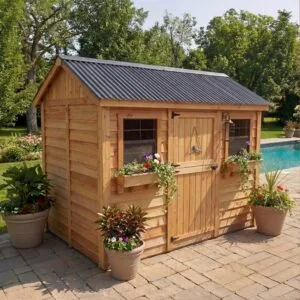
A final walk-around of the shed exterior helps catch issues before winter worsens them.
Inspect siding and trim for holes or cracks and fill them as needed. If you choose to repaint, use waterproof exterior paint and allow proper drying time between coats.
Clear away leaves, vines, and vegetation growing too close to the shed. Trapped moisture from plants can lead to rot and deterioration over time, especially during freeze-thaw cycles.
Ready for Winter, Ready for Spring
Winterizing your shed may sound like a big task, but breaking it into manageable steps makes it much more approachable. A little effort each day can have your shed fully prepared before winter arrives.
By cleaning thoroughly, making small repairs, and protecting both the interior and exterior, you’ll significantly extend the life of your shed and avoid major repairs down the road. When spring returns, your shed will be ready to use—no surprises required.